
|
An interview with Łukasz Tomsia, an expert in recycling, project management, and business transformation.
Stalwart Manacus: How did your role in the project to build a new breaker at Orzeł Biały S.A. in Piekary Śląskie begin?
Łukasz Tomsia: I took over the project at a stage when the investment was already underway, which from a management perspective was one of the biggest challenges. At the same time, we had an approved deadline for transferring production from the Bytom site to Piekary Śląskie, a schedule reported directly to the Management Board, and operational pressure related to the approaching seasonal peak in battery replacements. This meant an increased volume of raw material and no margin for error.
The breaker played a key role in the entire value chain. It was the bridge between deliveries of used batteries and the smelting department, where the final lead recycling and the production of alloys used for new batteries took place. In practice, this meant the need to manage technology, logistics, operational teams, and business expectations in parallel. From a managerial standpoint, it was a project that required constant balancing between long-term planning and dynamic responses to day-to-day constraints.
What proved crucial was intensive communication between the project office, the plant, commercial departments, and the teams responsible for recycling and smelting.
SM: What were the biggest challenges in the cooperation between the Polish–Italian project team?
ŁT: The biggest challenge, contrary to appearances, was not the language barrier but the cultural differences in management and decision-making styles. The Italian team brought a high level of flexibility, a willingness to quickly test solutions, and an ability to act under conditions of incomplete information. The Polish team, on the other hand, operated with greater structure, risk analysis, and precise planning.
To bring this together, from the very beginning we based our cooperation on the PDCA methodology (Plan–Do–Check–Act). It became a shared, neutral operational language understood by both sides. Every technological change, every schedule adjustment, and every operational decision had its place within this cycle. From a management perspective, the key was to establish a single working rhythm in which Italian dynamism met Polish process discipline.
The result was not a compromise, but genuine synergy—a cooperation model that allowed us to act quickly, yet in a controlled manner.
SM: Does the PDCA methodology still make sense in a VUCA and BANI world, with the dynamic development of recycling technologies, including batteries for electric vehicles?
ŁT: Absolutely. The past decade has been a revolution in the battery industry—from the dominance of lead-acid technology to the dynamic growth of lithium-ion batteries. Technologies, regulations, and market expectations have changed, but the foundation of effective operational management has remained the same.
PDCA is not a rigid methodology—quite the opposite. It fits perfectly into realities of volatility and uncertainty. It is a tool that brings order to chaos and enables organisations to learn continuously. In recycling, we are additionally dealing with the circular economy, where continuous process improvement is a prerequisite for efficiency and safety.
Regardless of whether we are talking about lead-acid or lithium-ion batteries, the PDCA cycle remains a decision-making compass. It enables adaptation to technological, regulatory, and market changes without losing control over the process.
SM: Looking back, what stands out most in your memory from this project?
ŁT: Definitely the people and the relationships we managed to build. The project was intense, carried out under time pressure and a high level of responsibility, yet at the same time it was very human. We were able to work together, but also to celebrate small successes as a team.
I still remember the moment during technological testing over the Christmas period, when we shared panettone brought by our Italian partner. Hundreds of cups of espresso drunk on the production floor often bonded the team more effectively than formal team-building workshops. It was a form of cooperation where professionalism went hand in hand with genuine commitment.
Experiences like that build trust and stay with you throughout your entire professional life.
SM: How do you assess the impact of the European Union’s recent decisions regarding the continued production and registration of combustion-engine vehicles on the lead-acid battery and recycling market?
ŁT: From the perspective of the lead-acid battery and recycling industry, these are market-stabilising decisions. Maintaining the ability to produce and register combustion-engine vehicles—especially hybrids and those based on alternative fuels—ensures continued demand for lead-acid batteries, which remain a key component of these vehicles. This provides room for long-term investment planning and the development of recycling facilities.
Lead-acid batteries are one of the best-functioning examples of a circular economy, with recycling rates exceeding 95%. EU decisions help maintain the continuity of this model rather than causing sudden volume disruptions. Importantly, lead recycling significantly reduces CO₂ emissions compared to primary production. In this sense, the industry does not oppose climate goals—it actively supports them. I see these decisions as a rational compromise between the energy transition and Europe’s raw material and industrial security.
SM: New standards for permissible blood lead levels in employees are being significantly tightened. What consequences will this have for recycling facilities?
ŁT: This is one of the biggest technological and organisational challenges for the industry. Reducing permissible blood lead levels for employees requires not only procedural changes but, above all, significant capital investments. Key areas include process containment, modern dust extraction systems, automation of the most exposed production stages, and advanced monitoring of the working environment.
It also entails a shift in occupational health and safety management—from reactive to systemic and predictive approaches. These are costly but unavoidable investments. Facilities unable to meet the new requirements will simply be pushed out of the market.
On the other hand, these regulations raise the entry barrier for the industry and strengthen the position of modern, responsible operators. In the long term, this acts as a stimulus for further technological development and helps maintain the competitiveness of European recycling.
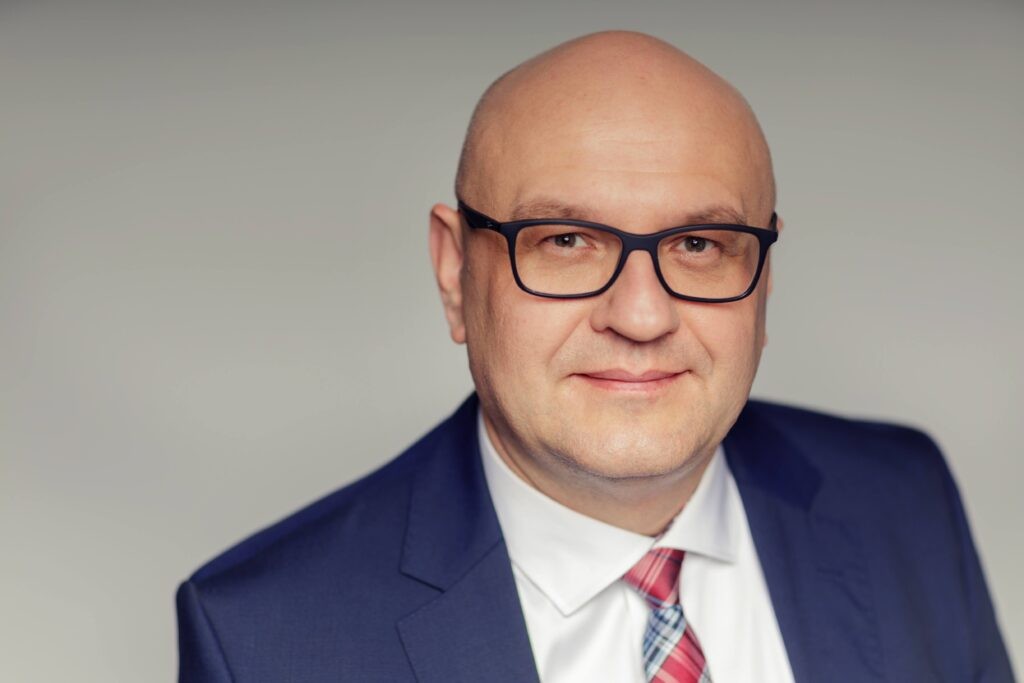
Łukasz Tomsia – Managing Director and expert in recycling and business transformation. He has many years of managerial experience in the automotive and heavy industry sectors, including positions at PreZero and Orzeł Biały S.A. At Orzeł Biały, he was responsible for coordinating the strategic project of building a modern Breaker facility, carried out in a highly regulated environment under significant operational pressure.
He specialises in process optimisation and improving operational efficiency, using Lean Management, WCM, and Six Sigma tools, as well as in managing financial performance and P&L accountability.
He specialises in process optimisation and enhancing operational efficiency using Lean Management, WCM, and Six Sigma methodologies, as well as in managing financial performance and P&L responsibility.


